Coffee improve workout performance? If you’ve ever knocked back an espresso before hitting the gym, you already know the answer intuitively. But the science behind that pre-workout buzz is far more powerful than most people realize. Coffee — specifically caffeine — is one of the most research-backed ergogenic aids available, and the best part is it’s sitting right in your kitchen.
In this post, we break down exactly how coffee affects your body during exercise, when to drink it for maximum effect, and how much you actually need. Whether you’re a runner, lifter, or weekend warrior, this guide has you covered.
The Science: How Caffeine Works in the Body
Caffeine is a central nervous system stimulant. When you consume it, it blocks adenosine receptors — the ones responsible for making you feel tired. This creates a cascade of effects: increased alertness, reduced perceived effort, and a surge in adrenaline. All of these translate directly into better athletic output.
According to the International Society of Sports Nutrition (ISSN), caffeine is one of the few supplements with strong Level 1 evidence for improving performance. Read the full ISSN Position Stand on Caffeine and Exercise for the complete research breakdown.
What Does the ISSN Say About Coffee and Exercise?
The International Society of Sports Nutrition (ISSN) considers caffeine one of the most effective and well-researched performance-enhancing supplements available. After reviewing decades of scientific studies, the ISSN concluded that caffeine can improve endurance, strength, power output, reaction time, mental focus, and overall athletic performance.
Key findings from the ISSN Position Stand include:
- Optimal performance benefits occur at 3–6 mg of caffeine per kilogram of body weight.
- Caffeine is effective for both endurance and resistance training.
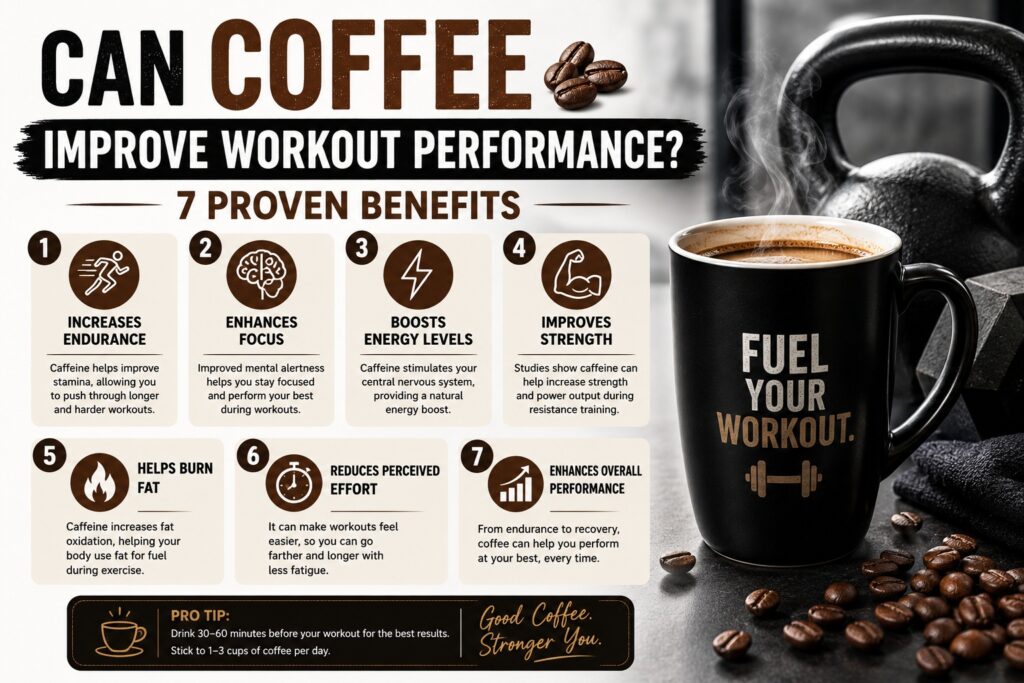
- Benefits are typically seen when consumed 45–60 minutes before exercise.
- Lower doses may still improve alertness and focus.
- Higher doses do not necessarily provide greater benefits and may increase side effects.
These findings explain why coffee remains one of the most popular and evidence-based pre-workout drinks among athletes and fitness enthusiasts worldwide.
Does Coffee Improve Workout Performance? The Science Explained
To understand how coffee improve workout performance, you need to understand caffeine — the primary active compound in every cup of coffee. Caffeine is classified by sports scientists as an ergogenic aid: a substance that directly enhances physical output.
When you consume caffeine, it crosses the blood-brain barrier rapidly and binds to adenosine receptors. Adenosine is the brain chemical that accumulates throughout the day and makes you feel tired. By blocking adenosine, caffeine reduces perceived fatigue, increases alertness, and sharpens focus — all of which translate directly into better performance at the gym.
Beyond the brain, caffeine also triggers the release of epinephrine (adrenaline), increases heart rate, and mobilises fatty acids from fat tissue — creating a cascade of physiological effects that benefit both strength and endurance athletes.
7 Proven Benefits of Pre-Workout Coffee
1. Increases Muscular Strength and Endurance
Research from the Journal of the International Society of Sports Nutrition confirms that coffee improve workout performance by increasing muscular endurance and power output. In controlled trials, athletes who consumed caffeine before resistance training completed significantly more repetitions at the same weight compared to those who trained without it.
More reps at the same weight means more training volume — and more training volume is the primary driver of muscle growth over time.
2. Boosts Fat Oxidation During Cardio
Caffeine signals fat cells to release fatty acids into the bloodstream, where they can be used as fuel. This effect — known as fat oxidation — is most pronounced during moderate-intensity cardio like jogging, cycling, or rowing.
Studies show caffeine can increase fat oxidation by 10–29% during aerobic exercise, making it a natural fat-burning aid without artificial stimulants.
3. Delays Muscle Fatigue
One of the biggest ways coffee can improve workout performance is by delaying the onset of fatigue. Caffeine lowers the perceived rate of exertion — meaning the same effort feels easier. This allows you to train harder and longer before hitting your limit.
In practical terms, this could mean two or three additional sets per session — adding up to significant volume over weeks of training.
4. Improves Mental Focus and Drive
Complex movements like deadlifts, snatches, and squats require full mental engagement. Coffee sharpens concentration, boosts dopamine levels, and keeps you mentally locked in during technical lifts.
Many athletes describe feeling “in the zone” after a strong black coffee — more present, more motivated, and more willing to push through discomfort.
5. Enhances Sprint Speed and Power Output
Complex movements like deadlifts, snatches, and squats require full mental engagement. Coffee sharpens concentration, boosts dopamine levels, and keeps you mentally locked in during technical lifts.
Many athletes describe feeling “in the zone” after a strong black coffee — more present, more motivated, and more willing to push through discomfort.
6. Reduces Post-Workout Muscle Soreness (DOMS)
A landmark study published in the Journal of Pain found that caffeine consumed before exercise reduced delayed onset muscle soreness (DOMS) by up to 48% compared to a placebo group. Less soreness means faster recovery and more consistent training.
This benefit is especially valuable for beginners who are building their workout frequency or athletes returning from a rest period.
7. Affordable and Natural Pre-Workout Alternative
Commercial pre-workout supplements often cost $40–60 per container and contain artificial sweeteners, dyes, and fillers. A quality bag of single-origin coffee delivers natural caffeine, antioxidants, and complex flavor — at a fraction of the cost.
For budget-conscious athletes, coffee improve workout performance as effectively as many commercial products, without the synthetic ingredients or inflated price tag.
How Much Coffee to Drink Before a Workout ?
The most important factor in how effectively coffee improve workout performance is dosage. Research supports a caffeine intake of 3–6 mg per kilogram of body weight for performance enhancement.
For a 75 kg (165 lb) person, that equals approximately 225–450 mg of caffeine. A standard 8 oz cup of drip coffee contains roughly 80–120 mg of caffeine — so 2 to 3 cups covers the optimal range for most people.
Begin at the lower end if you are new to using coffee as a pre-workout. Too much caffeine can cause jitteriness, increased heart rate, and GI discomfort — all of which impair rather than enhance performance.
When Is the Best Time to Drink Coffee Before Exercise?
Timing is everything. Caffeine reaches peak blood concentration approximately 45–60 minutes after consumption. For maximum benefit, drink your coffee 45–60 minutes before your workout begins.
Avoid caffeine within 6 hours of bedtime. Since caffeine has a half-life of 5–6 hours, an afternoon cup will still be partially active by evening — disrupting sleep, which is critical for muscle recovery and hormonal balance.
Best Types of Coffee for Workout Performance
Black Coffee
Plain black coffee — drip brewed or French press — is the gold standard for pre-workout use. Zero calories, no added sugar, and a clean caffeine dose. Ideal for fasted morning training sessions.
Espresso
A double shot of espresso delivers approximately 120–140 mg of caffeine in a small volume. Fast to prepare, easy on the stomach, and available in virtually every café worldwide. An excellent option before gym sessions.
Cold Brew
Cold brew is brewed slowly with cold water over 12–24 hours, producing a concentrate with higher caffeine content and lower acidity than regular drip coffee. It is gentler on the stomach — ideal if hot coffee causes digestive issues before training.
Further Reading on Fitness Fingers
Coffee improve workout performance Now that you understand how coffee improve workout performance, you might want to explore how to maintain your fitness and coffee routine in different scenarios:
Links 1: How to Stay Fit While Traveling: 10 Powerful Strategies – Brew and Beyond
If you travel frequently, read our complete guide on how to stay fit while traveling — covering hotel workouts, nutrition strategies, and how to use coffee strategically on the road.
Links 2: fitnessfingers.com/best-travel-coffee-mugs/
For athletes on the go, we reviewed the best travel coffee mugs for coffee lovers — ensuring your pre-workout brew stays hot from home to gym.
Links 3: fitnessfingers.com/beginners-guide-to-specialty-coffee/
New to quality coffee? Our beginner’s guide to specialty coffee explains how to choose, brew, and appreciate high-quality beans that taste as good as they perform.
Can Coffee Replace Pre-Workout Supplements?
For most recreational athletes, yes. Black coffee delivers the most studied ergogenic compound (caffeine) alongside natural antioxidants — without artificial additives.
If you want to build on coffee’s benefits, combine it with creatine monohydrate — a well-researched, safe supplement that increases strength and power output. Together, coffee and creatine form a powerful, natural performance stack.
Who Should Avoid Pre-Workout Coffee?
- People with anxiety disorders or heart arrhythmias
- Pregnant individuals (consult your doctor)
- Those with acid reflux or GERD
- People highly sensitive to caffeine
Always listen to your body and consult a healthcare professional if you have underlying health conditions.
ISSN Key Takeaways on Caffeine and Exercise
If you’re looking for a simple summary of the current scientific consensus, the ISSN Position Stand concludes that caffeine:
- Improves endurance performance
- Enhances strength and power output
- Increases mental alertness and focus
- Reduces perceived fatigue during exercise
- Works best when consumed 45–60 minutes before training
- Is one of the most effective legal performance enhancers available
For most healthy adults, a moderate amount of coffee before exercise can be an easy and effective way to improve workout quality and performance.
Conclusion
Coffee improve workout performance — this is not a trend or a marketing claim. It is one of the most consistently supported findings in the entire field of sports nutrition science.
Consumed at the right dose (3–6 mg per kg of body weight) and timed 45–60 minutes before training, a cup of quality black coffee can increase strength, extend endurance, sharpen focus, accelerate fat burning, and even reduce post-workout soreness.
Best of all, it is natural, affordable, and genuinely enjoyable. Make your daily cup work harder for you — your body and your performance will thank you.
Frequently Asked Questions
Q: Does coffee really improve workout performance?
A: Yes — coffee improve workout performance through multiple mechanisms, primarily via caffeine’s action on adenosine receptors. The evidence base spans thousands of peer-reviewed studies across endurance, strength, and power sports.
Q: How long before a workout should I drink coffee?
A: Consume coffee 45–60 minutes before exercise. Caffeine peaks in the bloodstream around 60 minutes after consumption, so timing it right ensures maximum performance benefit.
Q: How much coffee should I drink before working out?
A: The research-backed dose is 3–6 mg of caffeine per kg of bodyweight. For an 80kg person, that’s roughly 240–480mg — equivalent to 1–3 strong coffees. Start on the lower end and see how you respond.
Q: Is black coffee better than pre-workout supplements?
A: For most recreational athletes, coffee improve workout performance as effectively as standard pre-workout supplements. Coffee provides natural caffeine without synthetic additives. For elite athletes wanting additional compounds (beta-alanine, creatine), a coffee-plus-creatine stack is a powerful natural combination.
Q: Can coffee help with fat loss during workouts?
A: Absolutely. Caffeine increases fat oxidation by 10–29% and raises metabolic rate. When consumed pre-workout without added sugar or cream, it enhances your body’s ability to use fat as fuel during exercise.
Q: Does coffee cause dehydration during workouts?
A: At moderate doses (1–2 cups), the diuretic effect of caffeine is minimal and well-offset by the water content of the coffee itself. Stay normally hydrated before and during exercise and you’ll be fine.
Q: How long does caffeine stay in your system?
Caffeine has a half-life of about 5–6 hours. So if you drink coffee at noon, half the caffeine will still be active at 5–6 pm. Keep this in mind if you train in the evening.